
SEO for Online Ordering, Customer Apps and Direct Sales ChannelsSEO для онлайн-заказов и клиентских приложений
How direct ordering pages and customer apps can support search visibility for restaurants, retail, delivery and service businesses.Как страницы прямых заказов и клиентские приложения помогают видимости ресторанов, ритейла, доставки и сервисных бизнесов.
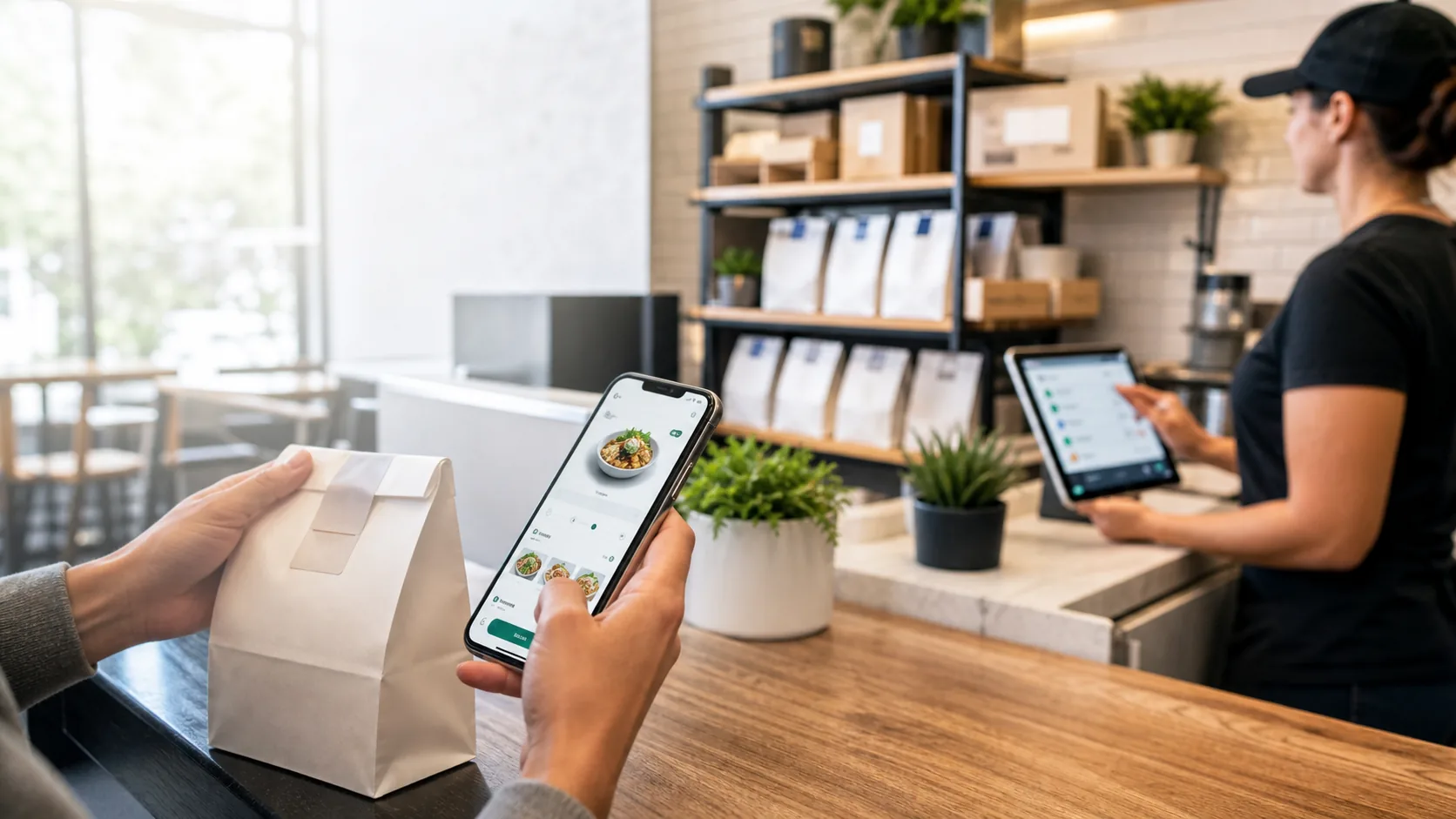
Create crawlable public pages that explain the direct ordering experience, catalog categories, pickup, delivery, loyalty, customer account history and support process.
Кратко на русском
Как страницы прямых заказов и клиентские приложения помогают видимости ресторанов, ритейла, доставки и сервисных бизнесов.
- Проверьте, какой поисковый вопрос закрывает страница: заказ, запись, POS, CRM, склад, доставка, клиентское приложение или сравнение решений.
- Свяжите страницу с реальными операциями SABSUS: клиент, заказ, сотрудник, склад, оплата, доставка, отчет и автоматизация.
- Дайте следующий шаг: перейти к демо, тарифам, нишевой странице, модулю или практическому уроку.
Short answer
Create crawlable public pages that explain the direct ordering experience, catalog categories, pickup, delivery, loyalty, customer account history and support process.
Direct ordering often exists behind an app or checkout flow, while the public website does not explain what can be ordered, how fulfillment works or why customers should order directly.
The app is not enough by itself
A customer app can convert repeat buyers, but search engines need visible pages. If all useful information is hidden behind app screens, the business loses discovery opportunities.
The website should describe the app, ordering flow, categories, benefits, delivery options and support path in crawlable HTML.
Explain the order journey
A strong ordering page answers what happens after the customer clicks order: availability check, checkout, payment, confirmation, kitchen or staff workflow, delivery or pickup and status updates.
This helps both users and AI systems understand the actual operating path, not just the marketing promise.
Reduce marketplace dependency
Many businesses rely on marketplaces because customers can find them there. Direct ordering SEO gives the business another route: brand search, category search, local intent, repeat purchase and saved customer history.
SABSUS pages should explain ownership of customer relationship, margin, order history and repeat offers without overstating results.
Connect app pages to module pages
Internal links should connect customer app content to POS, CRM, inventory, delivery, payments and analytics pages. That creates a topical graph around direct sales, not one isolated app page.
The article, module and landing pages should all reinforce the same entity: SABSUS as a connected operating platform.
Implementation checklist
- Crawlable page for direct ordering
- Visible categories and service terms
- Delivery/pickup details
- Customer account and loyalty explanation
- Links to POS, CRM, inventory and delivery modules
Common mistakes to avoid
- Publishing a page before it answers a real buyer or operator question.
- Using broad claims without showing the workflow, data or module that supports the claim.
- Letting metadata, schema and visible page text describe different things.
- Creating isolated content that does not link to related SABSUS modules, lessons or comparison pages.
- Measuring the page only by visits instead of the action it should create: demo request, call, order, booking, setup step or internal handoff.
Content assets to add next
The page becomes stronger when it is supported by real product and operational proof. Add screenshots, process examples, checklists, before-and-after states, or short clips when they help the reader understand what happens in the business.
For SEO content, the most useful asset is usually not decoration. It is a concrete view of the workflow: an order status screen, a customer profile, an inventory change, a delivery assignment, a booking slot, a white-label app screen or an owner dashboard.
| Asset | Why it helps |
|---|---|
| Screenshot or workflow image | Shows that the concept is attached to a real system, not only a marketing claim. |
| Checklist | Turns the article into a practical operator resource that can be used during setup. |
| Comparison criteria | Helps buyers and AI systems understand when SABSUS is a fit and when another tool may be enough. |
| FAQ | Answers the exact doubts that block a buyer, owner or implementation team from taking the next step. |
Measurement and next actions
After publishing this page, check whether it is discoverable through internal links, present in the sitemap and represented in content-index.json. The page should also be reachable from at least one hub and one relevant product or module page.
Search Console should be used to watch impressions, query variants and click behavior. Analytics should watch whether users continue to the related SABSUS page, demo request, contact section, pricing page, customer app page or module page. If the page attracts impressions but not actions, the next edit should improve the above-the-fold answer and the internal call to action.
The next content pass should compare this page against the top competing results for the target query. Look for missing buyer criteria, screenshots, FAQ questions, examples, schema and internal links. Add only what makes the page more useful and more specific.
How SABSUS connects this to operations
| Layer | What it should prove |
|---|---|
| Customer and order data | The page should connect search, app, POS, CRM and order history instead of treating them as separate systems. |
| Inventory and fulfillment | The promise on the page should match actual availability, status updates, staff tasks and delivery capacity. |
| Owner control | The owner should be able to review results through reports, analytics, tasks, exceptions and repeat customer behavior. |
Related SABSUS pages
Commercial next steps
Direct ordering and customer-app searches should move into pages that explain the branded ordering, delivery and customer-retention workflow.
FAQ
Who is this page for?
It is for buyers evaluating direct ordering instead of marketplace dependency.
What should be fixed first?
Direct ordering often exists behind an app or checkout flow, while the public website does not explain what can be ordered, how fulfillment works or why customers should order directly.
What is the SABSUS approach?
Create crawlable public pages that explain the direct ordering experience, catalog categories, pickup, delivery, loyalty, customer account history and support process.